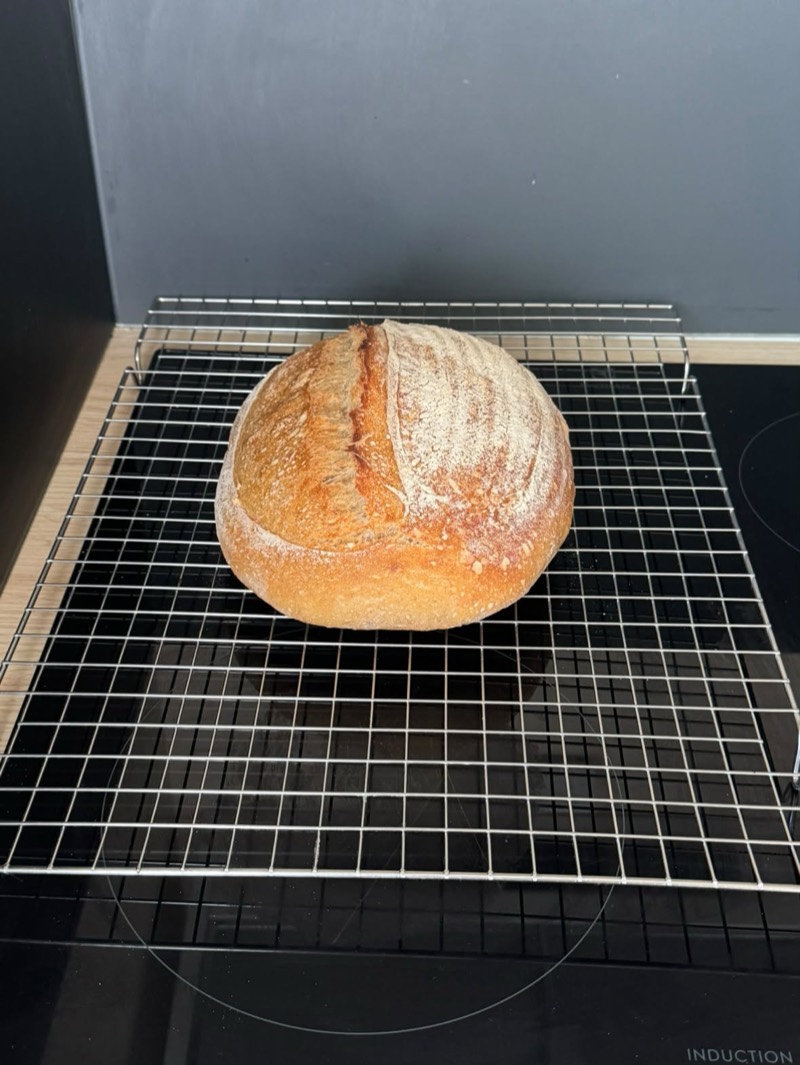
Photo: Nhall0901 · CC0 1.0
Sourdough Bread
Sourdough is one of the oldest ways to raise a loaf of bread. Instead of packet yeast, bakers feed a living starter of flour and water where wild yeasts lift the dough and lactic acid bacteria turn sugars into tangy organic acids. That slow partnership builds a blistered crust, a chewy crumb, and a loaf that stays fresh longer without preservatives.
- One of the oldest loaves
- Around 3700 BCE, excavated in Switzerland
- Bacteria-to-yeast ratio
- About 10–100 bacteria per yeast
- Traditional dough pH
- 3.8 to 4.5 (Type I sourdough)
A Symbiosis in a Jar
A sourdough starter needs only wheat flour and water, yet a single jar can hold dozens of microbial species. Across starters studied worldwide, microbiologists have identified more than 50 species of lactic acid bacteria and over 20 species of wild yeast. Most arrive with the flour itself, while a smaller share comes from the baker's hands. In classic starters, the bacterium Fructilactobacillus sanfranciscensis teams up with acid-tolerant yeasts such as Kazachstania humilis. They do not fight over food: the yeast cannot digest maltose, the main sugar released from wet flour starch, whereas the bacteria thrive on maltose and leave behind glucose that the yeast eats instead.
How Bakers Steer the Tang
Yeast cells blow carbon dioxide bubbles into the gluten web to raise the loaf, while bacteria brew two main organic acids that set its flavor. Lactic acid tastes mild and creamy, like yogurt; acetic acid tastes brisk and sharp, like vinegar. Bakers tip the balance between them by changing hydration and temperature. A wetter, warmer starter encourages faster bacterial growth and milder lactic acid, whereas a stiffer, cooler starter shifts production toward sharper acetic acid. Chilling shaped loaves in a refrigerator—a step bakers call retardation—slows proofing and develops a richer flavor before the dough hits a hot, steamy oven.
From Ancient Hearths to Gold Country
People leavened bread with wild starters from the dawn of farming in the Fertile Crescent and ancient Egypt right down to the European Middle Ages. Brewers' foam, called barm, gradually displaced sourdough in many towns, and commercial baker's yeast took over industrial baking after Louis Pasteur explained microbial fermentation in the late 1800s. During the 1849 California Gold Rush, prospectors mostly baked with commercial yeast or baking soda, yet French bakers brought sourdough methods to Northern California and made tangy white loaves a San Francisco signature. Decades later, when conventional leavenings proved unreliable in the 1898 Klondike Gold Rush, miners carried starter pouches into Alaska and the Yukon—earning northern old-timers the nickname 'sourdoughs.'
Keeping Power, Nutrition, and Global Kin
Acid changes more than taste. A low pH wards off mold and spoilage bacteria without chemical preservatives, and it wakes up natural grain enzymes called phytases. Those enzymes break down phytic acid in the bran, making dietary minerals easier to absorb, while fermentation gives sourdough a lower glycemic index than many other breads. Traditional crusty loaves are only one branch of a wide family: Italian panettone, Danish rye bread (rugbrød), Mexican birote salado, Ethiopian injera made from teff, and Indian dosa batters of rice and black gram all rely on sourdough fermentation.